How to Check a VIN Number in Germany: The Ultimate Guide to the Fahrgestellnummer
Category
TÜV & Legal Germany
Updated
Jun 2026
Practical note
Legal vehicle deadlines are easier to manage when the date, certificate, and follow-up actions stay visible in one place.
How to Check a VIN Number in Germany: The Ultimate Guide to the Fahrgestellnummer
Buying a used car from Germany can be an incredible deal. The country is world-famous for its well-maintained Autobahn cruisers, premium engineering, and strict vehicle inspection standards (TÜV). However, whether you are an individual buyer importing a car or a fleet manager adding vehicles to your workspace, the market poses certain risks. From clocked mileages to hidden history, how do you ensure the German vehicle you are looking at is actually a safe investment?
The answer lies in 17 simple digits: the VIN (Vehicle Identification Number), known in Germany as the Fahrgestellnummer.
In this guide, we will break down exactly how to check a German VIN number, what information you can uncover, and how to verify records cleanly before making a commitment.
Keep the next vehicle deadline visible without scattered paperwork.
Fahrnex connects reminders, documents, and service history so inspections and maintenance are easier to plan before they become urgent.
Create a free accountWhat is a German VIN (Fahrgestellnummer)?
Every vehicle manufactured or registered in Germany has a unique Vehicle Identification Number (VIN). It serves as the vehicle’s distinct digital DNA. No two numbers are alike, ensuring absolute traceability.
In Germany, you will find the VIN listed explicitly in two primary places on the official vehicle registration documents (Zulassungsbescheinigung):
- Zulassungsbescheinigung Teil I (Fahrzeugschein): Look directly at section E. This is the smaller paper meant to be kept in the vehicle.
- Zulassungsbescheinigung Teil II (Fahrzeugbrief): Also located in section E. This is the large ownership certificate showing title history.
Physically, the VIN is stamped directly onto the vehicle body. Common locations include a metal plate under the hood, at the bottom corner of the windshield, or inside the driver’s side door pillar.
Why Should You Check a German VIN?
Germany has remarkably strict data privacy laws (GDPR), which means vehicle histories are not completely open public records. Unlike some international markets where centralized platforms track insurance claims seamlessly, verifying a German vehicle requires a reliable starting point.
A thorough VIN decode helps you protect your investments against:
- Odometer Fraud (Tachomanipulation): Industry experts estimate that up to one-third of used cars sold across Germany suffer from altered odometers. Cross-referencing factory build dates with maintenance logs is essential to flag anomalies.
- Mismatched Specifications: Sellers frequently misrepresent equipment options (trim levels, safety packs, or engine lines) to drive up values. Checking the VIN uncovers exactly how the car rolled off the factory floor.
- Operational Disorganization: For professional operations or active fleets, adding vehicles with incorrect technical configurations leads to parts ordering mistakes, improper maintenance schedules, and administrative chaos.
Step-by-Step: How to Check a VIN Number in Germany
Here are the most effective ways to extract data and verify a German vehicle's history:
1. Use an Online VIN Decoder
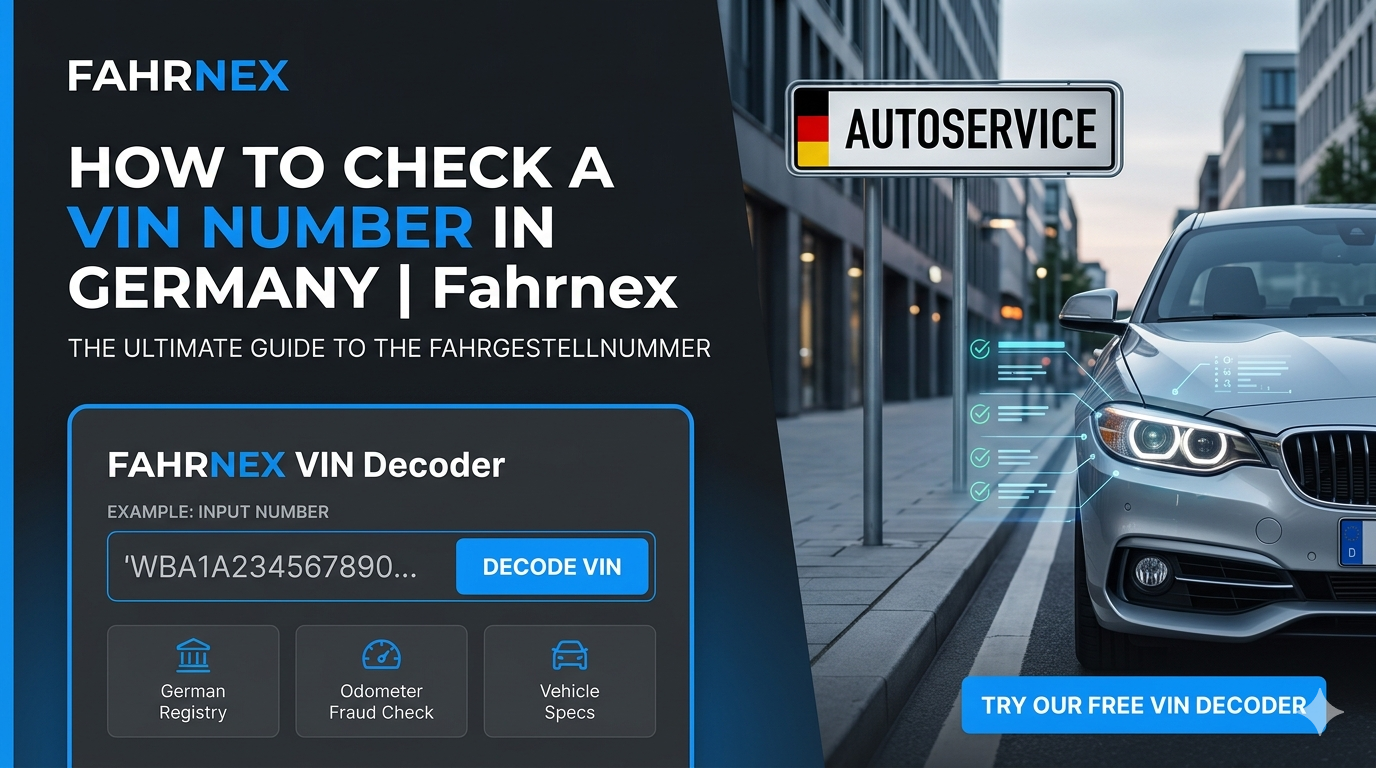
The fastest way to get verified manufacturer details is through a digital decoder platform. Instead of sorting through manual tables, you can use the official Fahrnex Public VIN Decoder. It allows you to check manufacturer-reported information, engine attributes, and production details completely free with no registration required.
2. Request Official TÜV and Service Logs
In Germany, cars older than three years must pass a rigorous technical inspection (Hauptuntersuchung or TÜV) every 24 months. Always request the physical TÜV report (TÜV-Bericht) from the seller. Cross-reference the VIN listed on the top of the report with the actual car to verify validation stamps.
3. Check the Digital Service Booklet
Modern German manufacturers (such as BMW, Mercedes-Benz, Audi, and Volkswagen) maintain digital service records on internal company networks. If you bring the VIN to an authorized dealer, they can access the car's complete maintenance history. Because of strict local privacy regulations, dealers typically require permission or presence from the current registered owner to print these documents.
Decoding the 17-Digit VIN Structure
If you choose to visually inspect the 17-character sequence, it is categorized structurally into three core segments:
| Section Name | Characters | What It Reveals |
|---|---|---|
| WMI (World Manufacturer Identifier) | 1–3 | The region, country of origin, and vehicle manufacturer (e.g., WBA for BMW Germany, WDD for Mercedes-Benz Germany). |
| VDS (Vehicle Descriptor Section) | 4–9 | Technical specifications: model classification, body style, brake system configurations, and exact engine variant. |
| VIS (Vehicle Identifier Section) | 10–17 | The unique production serial sequence, signaling the exact model year and the physical manufacturing plant. |
Start with Cleaner Records via Fahrnex
Manually tracking down vehicle attributes shouldn't create administrative friction. Whether you are managing an evolving fleet, operating a repair business, or managing personal vehicles, clean vehicle data is fundamental to operations.
Fahrnex eliminates the manual guesswork. Our public lookup provides instant access to manufacturing plant indices, compliance data, engine variants, and weight tolerances straight from the vehicle identification number.
Ready to decode a German vehicle instantly?
Paste your 17-character VIN into our free, instant lookup tool to see manufacturer data, production details, and safety specifications before adding the vehicle to your records.
Keep exploring