Kategorie
Vehicle Maintenance
Aktualisiert
Mai 2026
Fahrnex Hinweis
Die ruhigsten Wartungsentscheidungen entstehen meist dann, wenn Termine, Belege und Servicehistorie nicht getrennt voneinander gepflegt werden.
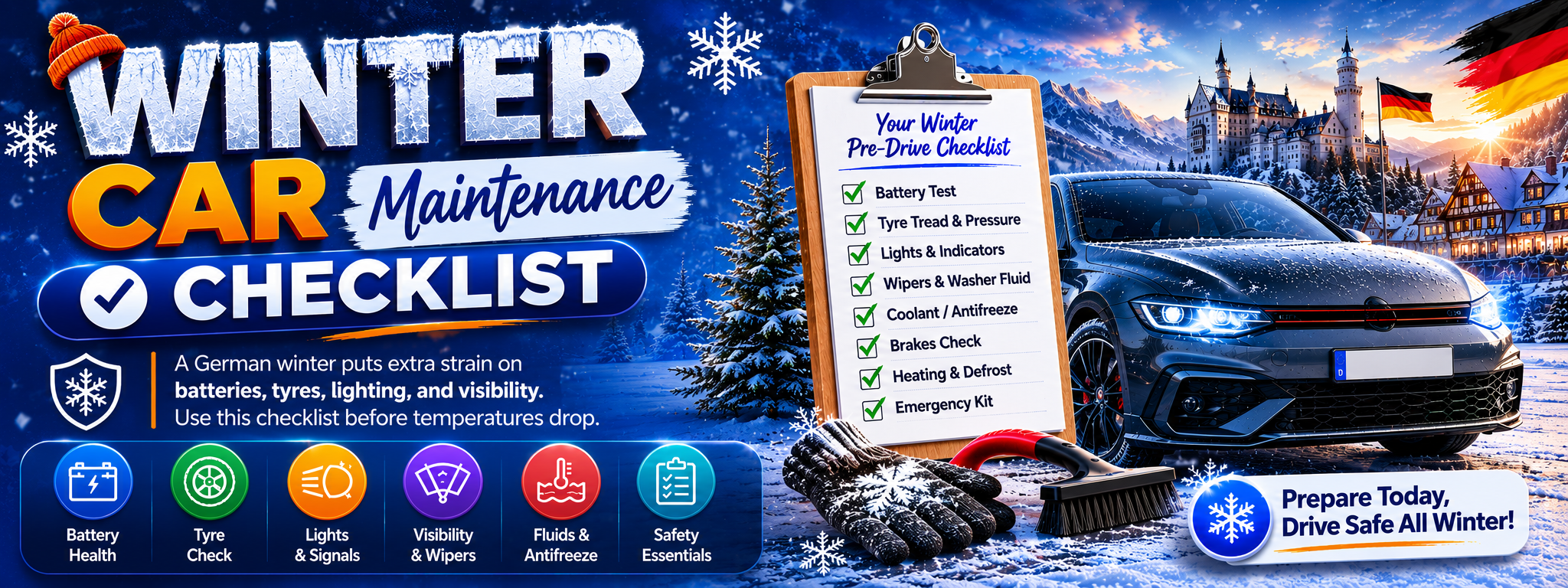
Winter Car Maintenance Checklist for Germany
Winter in Germany can be challenging for drivers. Cold temperatures, snow, ice, fog, and shorter daylight hours put extra pressure on your vehicle. If your car is not prepared for winter conditions, you may face battery problems, poor visibility, tyre issues, or even breakdowns during freezing weather.
Whether you drive daily to work, travel long distances on the Autobahn, or manage multiple vehicles, preparing your car before winter arrives is essential for safety, performance, and avoiding expensive repairs.
This winter car maintenance checklist will help you keep your vehicle safe and reliable throughout the cold season.
Behalten Sie den nächsten Fahrzeugtermin ohne Papierchaos im Blick.
Fahrnex verbindet Erinnerungen, Dokumente und Servicehistorie, damit Prüftermine und Wartung nicht erst im letzten Moment sichtbar werden.
Kostenlos registrieren1. Check Your Car Battery
Cold weather is one of the biggest reasons car batteries fail during winter. Low temperatures reduce battery performance, making it harder for your engine to start.
Warning signs of a weak battery include:
- Slow engine start
- Dim headlights
- Electrical issues
- Battery warning light on dashboard
Before winter starts:
- Test battery voltage
- Clean battery terminals
- Replace old batteries if necessary
- Check charging system performance
If your battery is older than 4–5 years, consider replacing it before winter.
2. Install Winter Tyres
Winter tyres are extremely important in Germany. They provide better grip, braking performance, and handling in snow and icy conditions.
In Germany, winter tyres are legally required during winter road conditions.
Check the following:
- Tyre tread depth (recommended at least 4 mm)
- Tyre pressure
- Signs of cracking or uneven wear
- Correct winter tyre markings
Winter tyres perform much better in temperatures below 7°C.
3. Inspect Lights and Indicators
Winter means shorter days, foggy mornings, and poor visibility. Proper lighting is essential for safe driving.
Check all exterior lights including:
- Headlights
- Brake lights
- Fog lights
- Indicators
- Reverse lights
- Number plate lights
Clean headlights regularly because dirt, snow, and salt reduce brightness significantly.
4. Replace Wiper Blades and Washer Fluid
Rain, snow, ice, and road salt reduce windshield visibility during winter. Good wiper blades are critical for safe driving.
Before winter:
- Replace worn-out wiper blades
- Use winter windshield washer fluid
- Check washer spray nozzles
- Remove ice carefully from wipers
Always keep extra washer fluid in your vehicle during long winter trips.
5. Check Coolant and Antifreeze
Your engine coolant protects the engine from freezing in cold temperatures.
Important checks include:
- Coolant level
- Antifreeze concentration
- Leaks in the cooling system
- Radiator condition
Low or incorrect coolant mixture can cause severe engine damage during freezing weather.
6. Inspect Brakes
Winter roads require reliable braking performance. Snow and ice increase stopping distances, making brake maintenance even more important.
Have your brakes inspected if you notice:
- Squeaking sounds
- Vibration while braking
- Longer stopping distance
- Brake warning lights
Check brake pads, discs, brake fluid, and ABS functionality before winter begins.
7. Test Heating and Defrost Systems
Your car’s heating and defrost systems help maintain visibility and comfort during freezing temperatures.
Ensure the following systems work properly:
- Cabin heater
- Front windshield defroster
- Rear window heater
- Climate control system
A malfunctioning defrost system can quickly become a safety risk in snowy or foggy weather.
8. Prepare an Emergency Winter Kit
Unexpected situations can happen during winter driving. Keep an emergency kit inside your vehicle.
Your winter emergency kit should include:
- Ice scraper
- Snow brush
- Warm gloves
- Flashlight
- Phone charger
- Warning triangle
- First aid kit
- Blanket
- Jump starter cables
This is especially important for long-distance travel during snowstorms or freezing nights.
9. Protect Your Car from Road Salt
German winter roads often use salt to melt snow and ice. Road salt can cause rust and corrosion over time.
To protect your vehicle:
- Wash your car regularly
- Clean wheel arches
- Protect underbody areas
- Apply paint protection if possible
Regular cleaning helps maintain both vehicle appearance and long-term value.
10. Track Winter Maintenance Properly
Managing winter maintenance manually can become difficult, especially if you own multiple vehicles.
Using a digital vehicle maintenance platform like Fahrnex helps you:
- Track maintenance history
- Monitor tyre changes
- Set service reminders
- Manage repair records
- Track expenses
- Prepare for TÜV inspections
Keeping organized maintenance records helps reduce breakdown risks and improves vehicle reliability during winter.
Final Thoughts
Winter driving in Germany requires preparation. A properly maintained vehicle improves safety, reduces repair costs, and helps you avoid unexpected breakdowns during freezing weather.
By following this winter car maintenance checklist, you can ensure your car stays reliable, efficient, and safe throughout the cold season.
Small preventive checks today can save you from major problems later.
Frequently Asked Questions
When should I install winter tyres in Germany?
Winter tyres should generally be installed when temperatures consistently fall below 7°C. Many drivers switch tyres between October and Easter.
Are winter tyres mandatory in Germany?
Yes. Winter tyres are legally required during winter road conditions such as snow, ice, or frost.
Why do car batteries fail more often in winter?
Cold temperatures reduce battery efficiency and increase engine starting resistance, making weak batteries fail more easily.
How often should I check tyre pressure during winter?
Check tyre pressure at least once a month because cold weather can reduce air pressure.
What should I keep in a winter emergency kit?
Essential items include a flashlight, blanket, gloves, ice scraper, first aid kit, phone charger, and jumper cables.
How can Fahrnex help during winter?
Fahrnex helps drivers track maintenance schedules, repairs, expenses, tyre changes, and service reminders in one place.
Häufig gestellte Fragen
Winter Car Maintenance Checklist?
A German winter puts extra strain on batteries, tyres, lighting, and visibility. Use this checklist before temperatures drop.
What should drivers or fleet teams do next?
Inspect tyre tread, pressure, and winter suitability before the first cold spell. Check battery health early because cold weather exposes weak batteries quickly. Fahrnex helps keep these tasks visible in one place.
Weiterführend