Company Vehicle Handover Checklist: A Guide for Small Fleets
A practical company vehicle handover checklist covering condition photos, mileage, keys, charging equipment and follow-up actions for small fleets in Germany.
By the Fahrnex Editorial Team · Reviewed by Umme Hanna Meskat
A company vehicle handover checklist creates a clear record of the vehicle, its condition and the equipment transferred when a driver changes. It should help the next person start work with the right information and give the business a consistent way to investigate problems later. A set of photographs alone is not enough: someone must also record what needs attention and who will deal with it.
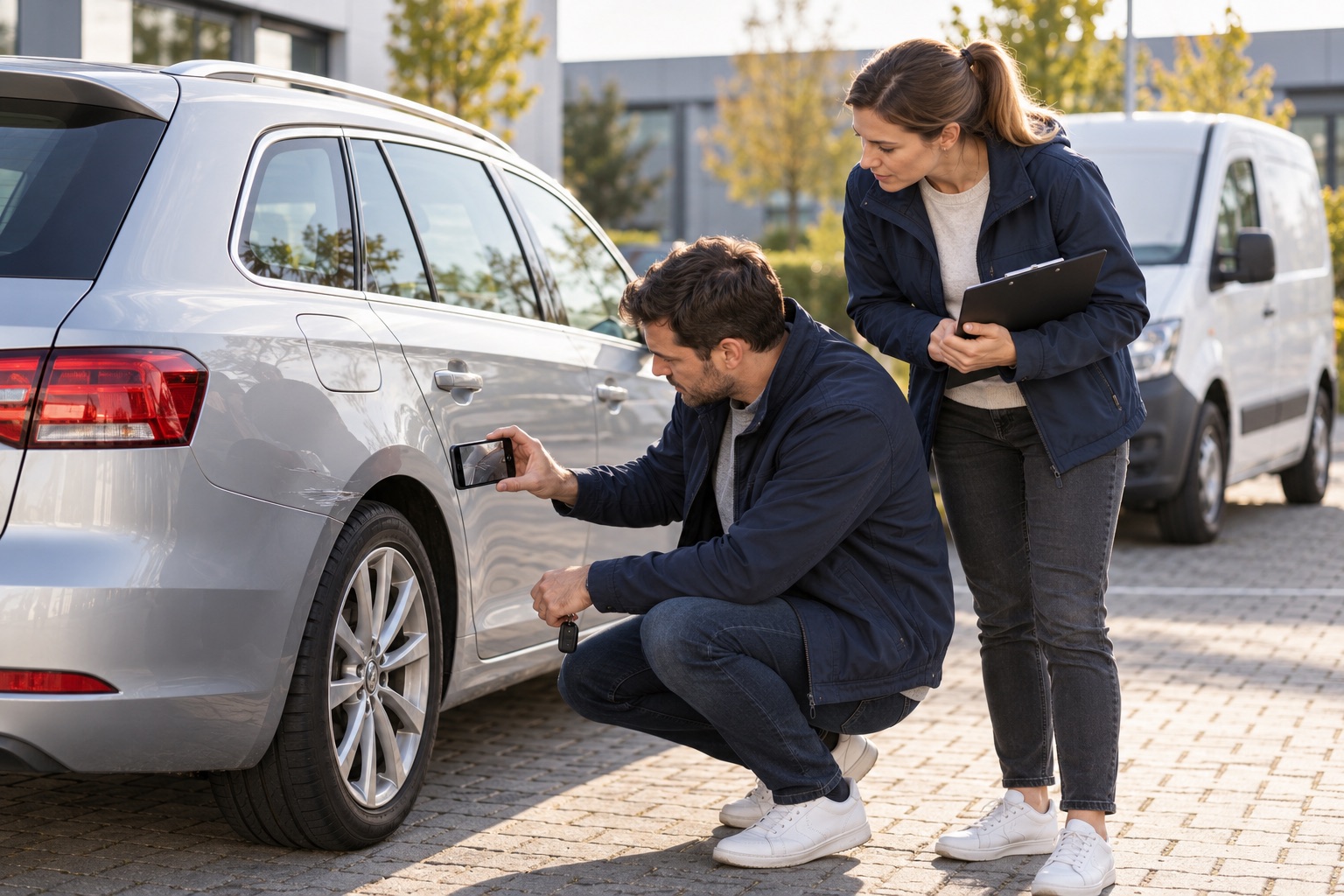
This guide is for small fleets, shared company cars and work vans in Germany. The checklist below is an operational template, not a substitute for your employer's safety procedures, a technical inspection, an insurance policy or legal advice.
What should a company vehicle handover record contain?
Use one record with five parts: vehicle identity, transfer details, condition, equipment and follow-up actions. Repeat the same structure when the vehicle returns. That makes the two records comparable without requiring a complicated fleet system.
| Record | Include | Check before closing |
|---|---|---|
| Vehicle and people | Vehicle reference, registration, relevant VIN reference, outgoing and incoming driver, date, time and location | Everyone is looking at the same vehicle and transfer |
| Use and condition | Odometer, fuel or charge level, visible condition and existing damage references | Measurements have units; photos match the written notes |
| Equipment | Keys, vehicle papers, charging equipment, cards and work accessories | Each item is present, missing or not applicable |
| Open work | Known faults, upcoming service, unresolved damage and the person responsible | Every open issue has a next action |
| Confirmation | Observations from both people and any unresolved disagreement | Both receive the same completed version |
Keep the next vehicle deadline visible without scattered paperwork.
Fahrnex connects reminders, documents, and service history so inspections and maintenance are easier to plan before they become urgent.
Create a free account1. Prepare before the driver arrives
Retrieve the previous handover record and the current vehicle file. Check whether a workshop visit, tyre change, warning message or damage report occurred since the last transfer. Decide who can authorise the vehicle's use if the check identifies an issue. A driver should not have to guess whom to call while standing beside a vehicle.
Keep the inspection conditions practical. Choose a safe, adequately lit place where both people can walk around the vehicle. If poor lighting, dirt or weather prevents a meaningful check, document that limitation and arrange a follow-up rather than recording an unqualified “no damage”.
Use an internal vehicle reference in filenames and shared folders. Store personal driver details only where they are actually needed. For a broader filing approach, see our guide to organising vehicle documents digitally.
2. Walk around the vehicle together
Start with a consistent route around the outside, then look at the cabin and the load area. The purpose is to record visible condition, not to diagnose every mechanical component. Write specific observations: “scratch on rear-left door, photo D02” is more useful than “some marks”.
ADAC's handover advice for private vehicle rental recommends a joint inspection, dated photographs, and recording mileage and fuel or battery level. Those recording habits also provide a useful starting point for an internal company process; private-rental rules should not be treated as the rules for employee liability.
For each issue, separate three questions:
Do not ask an employee to accept responsibility simply because a mark is first noticed at handover. The checklist documents observations. Responsibility, repair costs and insurance decisions need a separate assessment.
3. Record mileage, fuel and charging information
Read the odometer directly and record kilometres explicitly. A photograph of the dashboard can support the entry, provided it is safe to take and does not unnecessarily capture personal information. Note a warning message separately so it is not buried in a photograph.
For combustion vehicles, record the fuel level using the same method on departure and return. For electric vehicles, record state of charge and confirm which charging cable and access card are supplied. If a displayed range estimate is recorded, label it as an estimate rather than a guaranteed distance.
Clarify the business's return expectations before departure: where to park, how to report delays, whether to refuel or recharge, and who handles a missing card. Do not write card PINs or account passwords into the general handover document.
4. Count the items changing hands
An equipment list is more useful when it distinguishes “present”, “missing” and “not applicable”. Adapt it to the vehicle instead of asking every driver to tick irrelevant boxes.
Record a missing item as an action, not merely an empty box. For example: “second key not transferred; fleet coordinator to locate before Friday”. Avoid storing full payment-card details in a checklist that many staff can access.
5. Keep the handover separate from the safety check
A clean handover record does not establish that a vehicle is technically safe. DGUV's guidance on checks by driving personnel covers identifying obvious defects in vehicles within its scope. Use the applicable employer instructions and vehicle handbook for the actual checks. If a safety concern is identified, stop the ordinary handover and follow the responsible person's escalation process before use.
Keep unresolved warnings and overdue maintenance visible. “Driver informed” is not the same as “problem resolved”. Connect each issue to the relevant workshop document or maintenance task. Our guide to vehicle inspection and servicing explains why service timing must follow the vehicle's actual requirements.
A practical checklist to copy or print
Copy this template into your own document and adapt it to the vehicle and working arrangements. It is an original operational checklist, not an official statutory form.
| Field | Departure | Return |
|---|---|---|
| Vehicle reference and registration | ________________ | ________________ |
| Date, time and location | ________________ | ________________ |
| People completing the handover | ________________ | ________________ |
| Odometer in kilometres | ________________ | ________________ |
| Fuel / charge level | ________________ | ________________ |
| Photo and existing-damage references | ________________ | ________________ |
| Keys and equipment transferred | ________________ | ________________ |
| Warnings, defects and escalation | ________________ | ________________ |
| Action owner and target date | ________________ | ________________ |
| Confirmation / unresolved comments | ________________ | ________________ |
6. Close the loop after return
Compare the return record with departure, review new observations and confirm the equipment count. If there is a disagreement, preserve each person's account rather than silently replacing the original note. Keep later corrections traceable with their date and reason.
For a small fleet, a simple weekly review can ask: which handovers remain incomplete, which missing items have no owner, and which vehicle issues are still open? These are internal process checks, not industry benchmarks. Use them to improve the workflow rather than to infer fault automatically.
Restrict access to driver records and photographs to people who need them. Set an appropriate retention policy rather than keeping every image indefinitely. The European Commission's GDPR guidance explains the principles of data minimisation, purpose limitation and storage limitation; your concrete retention decisions need to fit the records and obligations involved.
Where Fahrnex fits
Fahrnex can help organise vehicle documents, maintenance reminders and expenses around a vehicle record. Keep your completed handover document alongside the relevant service and repair records, and use the tools your business has approved for confirmations and access control. This article does not claim that Fahrnex supplies a dedicated electronic-signature or driver-handover workflow.
Start with the checklist, test it on one vehicle change, and remove fields that nobody uses. If you are choosing software to support the wider process, compare the criteria in our vehicle management software guide or explore Fahrnex features.
Sources and scope
The workflow and blank template are Fahrnex editorial suggestions. The cover is an AI-generated editorial illustration, not a photograph of actual Fahrnex customers.
Frequently asked questions
What belongs in a company vehicle handover checklist?+
Record the vehicle and transfer details, visible condition, mileage, fuel or charge level, keys and equipment, and open actions. Compare the same fields when the vehicle returns.
Does a signed handover prove the vehicle is safe?+
No. A handover records observations and transferred items. Technical checks and the employer’s applicable safety procedures remain separate.
Fahrnex note
The calmest maintenance decisions usually come from keeping dates, receipts, and service history connected instead of scattered.
About this article
Fahrnex evidence check
Scope of this company vehicle handover checklist
This operational checklist combines original editorial workflow suggestions with the sources below. It does not establish technical safety or employee liability. Sources and material claims checked on 20 October 2026.
| Topic | Source | Practical limit |
|---|---|---|
| Recording condition and handling vehicle records | ADAC handover advice; DGUV Principle 314-002; European Commission GDPR principles. | Record observations consistently. Keep safety checks separate and limit personal information, access and retention. Private-rental guidance does not determine employee liability. |
Before using the checklist
- Adapt the template to your vehicles and employer procedures; assign open safety issues before use.
Editorially reviewed on 20 October 2026. Sources:
The editorial team checked official sources against the Fahrnex product methodology. This article is not a substitute for case-specific technical, legal or tax advice.