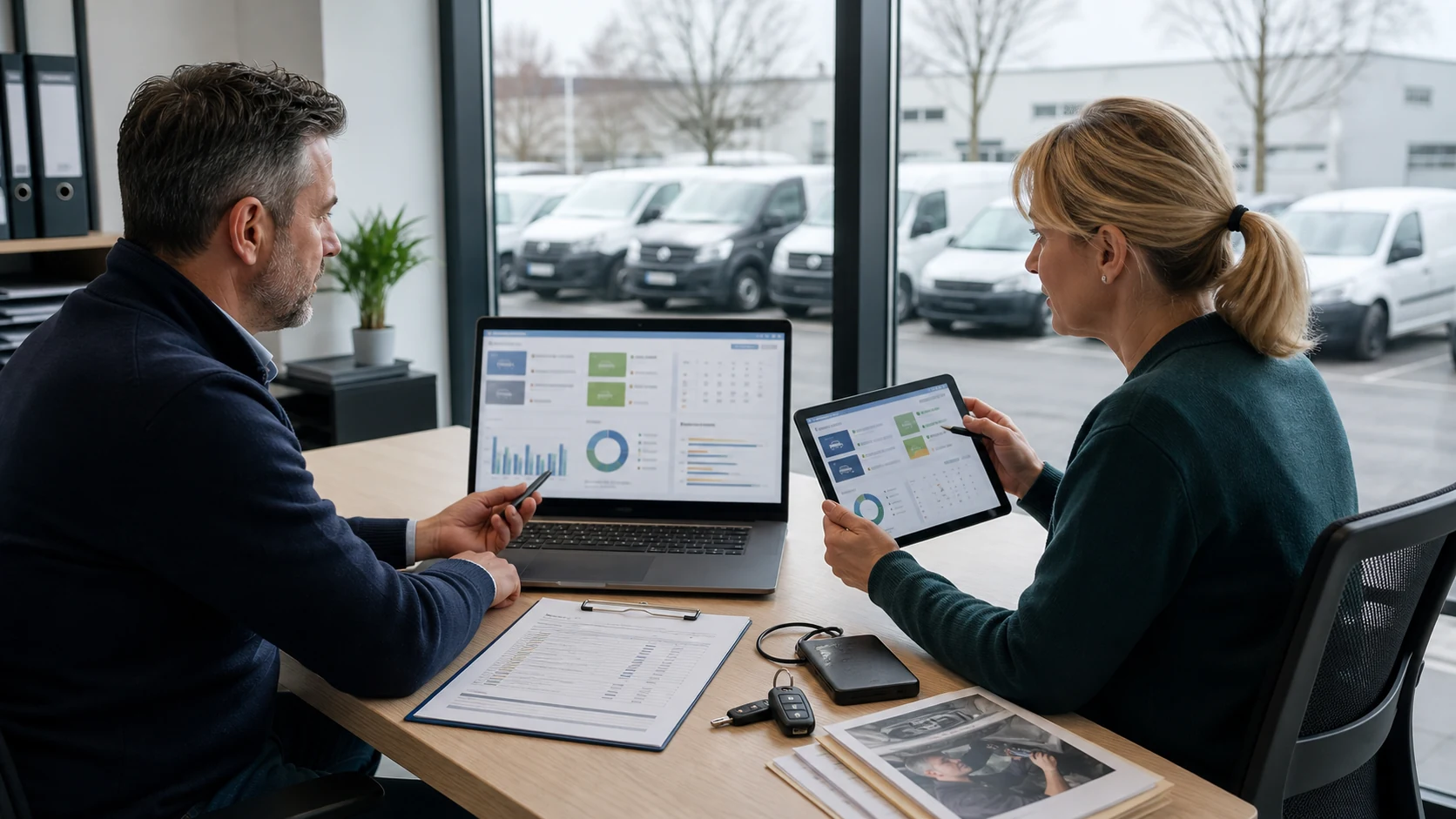
Workshop Customer Follow-Up: A Practical Service Reminder Process
Build a clearer workshop follow-up process with practical service handovers, vehicle-specific reminders, message examples and permission checks for Germany.
By the Fahrnex Editorial Team · Reviewed by Umme Hanna Meskat
A useful workshop customer follow-up process starts before the customer leaves the counter. The customer should understand what was done, what remains open and how the next maintenance requirement will be determined. A later reminder can then point back to that information instead of arriving as an unexplained request to book another appointment.

This guide is for independent workshops and service businesses in Germany. It sets out an editorial workflow you can adapt to your own team. It does not promise a higher booking rate, provide a legal classification for every message or replace manufacturer maintenance instructions.
Start with a clear service handover
Before thinking about automated reminders, give the customer a concise explanation of the completed work. Separate the invoice, the description of work and the next recommended step. They answer different questions: what was charged, what happened to the vehicle, and what the customer should consider next.
A useful handover summary identifies:
Do not invent a universal “next service in twelve months” rule. The vehicle's manufacturer guidance, service indicator, previous work and usage conditions determine what is appropriate. Where information is incomplete, say what still needs checking. Our guide to servicing and inspection intervals explains why different vehicles can need different schedules.
Keep the next vehicle deadline visible without scattered paperwork.
Fahrnex connects reminders, documents, and service history so inspections and maintenance are easier to plan before they become urgent.
Create a free accountDecide what each follow-up message is for
Use a small set of message purposes so staff do not treat every outgoing email as the same kind of communication. A request for clarification about work already authorised is different from a seasonal discount campaign. A maintenance reminder may also promote future business, so its label alone does not settle the legal position.
| Purpose | Useful content | Check before sending |
|---|---|---|
| Current-job communication | A specific question, collection detail or update about the work being handled | Recipient, job reference and a clear reason for the message |
| Open-issue follow-up | A factual reference to the issue and the agreed next action | Who owns the action and whether it has already been resolved |
| Future service reminder | Vehicle reference, source of the due date and a way to respond | Accuracy, customer preference and whether the message is advertising |
| Promotional campaign | An offer or invitation to purchase additional services | The relevant permission or other valid route for that channel |
Check permission before building a reminder list
In Germany, promotional electronic messages generally require prior express consent. The existing-customer exception in section 7(3) UWG has cumulative conditions; a previous invoice or an address in your workshop system is not, by itself, permission to send marketing. Check the current law and your particular communication with qualified advice where needed.
Assess the message's real content, not only its subject line. Adding an offer to a job-related message can change the assessment. The German supervisory authorities' direct-marketing guidance addresses consent, mixed contractual and advertising communications, and objections. The GDPR basis for processing contact details and the rules for using a marketing channel are related checks, not interchangeable permissions.
As an operational safeguard, keep the wording and record of any permission you rely on, respect withdrawal or objection promptly, and avoid turning an administrative email into a newsletter subscription. These controls support an assessment; they are not a declaration that every reminder is legally permitted.
Keep a small, usable follow-up record
A reminder list should explain why a person is on it and what happens next. Do not create a second customer database that nobody maintains. Link the record to the workshop's existing vehicle and job references, using only the data needed for the purpose.
| Field | Example or format | Why it matters |
|---|---|---|
| Vehicle / job reference | Internal reference rather than a long free-text description | Avoids mixing different visits or vehicles |
| Relevant service requirement | Date and/or mileage, with the source noted | Makes the reminder explainable |
| Communication purpose | Current job, unresolved issue, future reminder or promotion | Supports the right review and wording |
| Channel and preference | Customer's agreed method and applicable restrictions | Avoids contacting people through the wrong channel |
| Last action and owner | Date, outcome and responsible role | Prevents duplicate follow-ups |
| Next review | Date or event that requires the record to be checked | Keeps old assumptions from becoming automated messages |
Do not place unnecessary personal information in email subject lines or shared task titles. Limit staff access to what their role requires and define how outdated reminder records will be reviewed or deleted. Data minimisation and storage limitation are part of the GDPR principles described by the European Commission; a retention period should be chosen for the actual record and purpose, not copied from a generic template.
Build one simple sequence, with stop conditions
Start with a manual process that the team can explain. Automation is useful only after the underlying records and decisions are dependable.
Useful stop conditions include a completed booking, the customer reporting that the vehicle has been sold, an incorrect contact address, a withdrawn permission or an unresolved data error. A stopped marketing message does not automatically require deletion of every invoice or job record; assess those records separately.
Example messages to adapt
These examples illustrate clear wording. They are not pre-approved legal templates and should only be sent where the purpose, channel and data use have been checked. Replace the placeholders and remove anything that does not apply.
Example: a specific collection update
Subject: Update on your workshop visit [job reference]
Hello [name], the work agreed for [vehicle reference] is complete. Your collection details are [details]. We will explain the work and give you the relevant documents when you collect the vehicle. If you need to discuss collection, please contact [workshop contact].
Example: a future service reminder
Subject: Service reminder for [vehicle reference]
Hello [name], our record shows [service requirement] based on [manufacturer guidance / confirmed service information]. Please check your current mileage and service display, as your circumstances may have changed. If you would like to discuss the next step, contact [workshop contact]. [Include the appropriate preference or opt-out information where required.]
Keep sales offers out of the first example unless they have been separately assessed. For the second, do not state that a vehicle is definitely overdue if your records only contain an estimated date.
Measure whether the process is useful
Choose measures the team can calculate from real records, rather than borrowing an unsupported industry target. For example, count unresolved follow-up tasks, duplicate messages prevented, corrected contact records and completed actions. If you measure bookings, define the denominator and attribution method so a later booking is not automatically credited to the last reminder.
Review complaints and opt-outs alongside any commercial result. A process that produces more messages but less clarity is not an improvement. The aim is a reliable next step for the customer and less uncertainty for the workshop team.
A workshop follow-up checklist
Help customers keep their own vehicle records
A workshop's internal job system and a customer's vehicle organiser serve different purposes. Fahrnex helps customers organise vehicle documents, maintenance reminders and expenses. It should not be presented as a guarantee of workshop marketing compliance or an automatic replacement for your existing workshop communication system.
If you want to recommend Fahrnex to your customers, explore the Fahrnex partner programme. Applications are reviewed, and commission depends on eligible paid Premium invoices and agreed terms—not clicks or free registrations. Keep any commercial recommendation clearly identified.
For the wider recordkeeping workflow, see how to organise vehicle documents digitally and Fahrnex features.
Sources and scope
The process, tables and message examples are Fahrnex editorial suggestions, not findings from customer research or legal approval. The cover is an AI-generated editorial illustration.
Frequently asked questions
Can a workshop send marketing reminders to every previous customer?+
Not automatically. A previous invoice alone is not permission for electronic marketing. Check the actual message, channel and all applicable legal conditions before sending it.
How should the next service reminder date be chosen?+
Use vehicle-specific manufacturer guidance, the service indicator and confirmed service information. Do not apply a universal annual interval or describe an estimated date as a definite overdue service.
Fahrnex note
The calmest maintenance decisions usually come from keeping dates, receipts, and service history connected instead of scattered.
About this article
Fahrnex evidence check
Service reminders: scope and permission checks
The workflow and message examples are editorial suggestions. Official sources support the distinction between data-processing rules and electronic-marketing requirements; they do not pre-approve an individual reminder. Sources checked on 20 October 2026.
| Topic | Source | Practical limit |
|---|---|---|
| Electronic marketing and proportionate reminder records | Section 7 UWG; DSK direct-marketing guidance (February 2022); European Commission GDPR principles. | Check the actual message, channel and relevant conditions. A previous invoice alone is not marketing permission. Keep data collection and retention proportionate. |
Before sending a reminder
- Verify the vehicle-specific requirement, communication purpose, channel permissions and current customer preferences.
Editorially reviewed on 20 October 2026. Sources:
The editorial team checked official sources against the Fahrnex product methodology. This article is not a substitute for case-specific technical, legal or tax advice.