Winter Car Maintenance Checklist for Germany: 15 Checks Before Cold Weather
Prepare your car for winter in Germany with 15 practical checks covering tyres, battery condition, visibility, antifreeze, brakes, emergency equipment and electric vehicles.
By the Fahrnex Editorial Team · Reviewed by Umme Hanna Meskat
Winter preparation is not one dramatic service appointment. It is a series of small checks that protect visibility, starting reliability, grip and access to help when temperatures fall. A German winter can combine darkness, rain, road salt, frost, snow and sudden changes in road condition—sometimes during the same journey.
This checklist separates tasks that most drivers can inspect safely from work that belongs in a workshop. It also distinguishes German tyre law from familiar rules of thumb. Follow the vehicle handbook for specifications and never continue driving when a safety-critical warning, fluid leak or braking fault is present.
Quick winter checklist
Do the full inspection before the first likely frost, repeat the short checks during the season and perform a focused review before a long winter journey.
Keep the next vehicle deadline visible without scattered paperwork.
Fahrnex connects reminders, documents, and service history so inspections and maintenance are easier to plan before they become urgent.
Create a free account1. Confirm that the tyres are legally suitable
Germany has a situational winter-tyre requirement. Under section 2(3a) of the Road Traffic Regulations, the relevant obligation applies when roads have black ice, packed snow, slush, ice or frost. It is not a fixed legal season, and neither the “October to Easter” phrase nor a temperature of 7°C creates the legal duty.
Tyres used in those conditions must meet the statutory winter-tyre definition and carry the Alpine symbol—the mountain pictogram with a snowflake. A tyre marked only M+S no longer qualifies for driving in winter conditions after the transitional period ended on 30 September 2024. All-season tyres can qualify when they carry the Alpine symbol and otherwise meet the requirements.
The statutory minimum main-tread depth for passenger-car tyres is 1.6 mm. A greater winter tread depth is commonly recommended for safety, but do not describe a 4 mm recommendation as the legal minimum. The dedicated German winter-tyre guide explains the rules in more detail; this article focuses on maintaining the complete vehicle.
2. Inspect tread, pressure and visible condition
Check all four tyres and, where relevant, the spare. Measure tread in several places across the main grooves. Look for cuts, bulges, embedded objects, cracking, unusual shoulder wear and a difference between tyres on the same axle. A bulge, exposed structure or rapid pressure loss requires professional assessment and may make further driving unsafe.
Set pressure when the tyres are cold, using the vehicle manufacturer's value for the actual load—not the maximum pressure printed on the tyre sidewall. The correct value is commonly found in the handbook, door area or fuel/charging flap. Recheck after a large temperature change and before carrying passengers or luggage on a long trip. Reset or calibrate the tyre-pressure monitoring system only as instructed by the manufacturer.
3. Test the 12-volt battery by condition
Cold weather exposes a weak starter or auxiliary battery because electrical demand rises while battery performance can fall. Warning signs include slow cranking, flickering lights during starting, repeated low-voltage messages or a start-stop system that no longer activates despite normal conditions.
Age is a reason to test, not an automatic replacement instruction. ADAC notes that average life is around five years but a well-maintained battery can last six to eight years or longer. Usage, short trips, long storage, heat, charging and the vehicle's electrical system all affect condition.
A workshop or roadside service can perform a condition and starting-capacity test. Cleaning accessible dirt around the battery area may be reasonable, but do not disconnect, charge or replace a modern battery without the correct procedure and equipment. Start-stop vehicles can require the correct AGM or EFB type and electronic registration. Electric vehicles also rely on a 12-volt system, even though propulsion comes from the high-voltage battery.
4. Check every exterior light
Ask another person to help or use a safe reflection to inspect dipped and main beam, daytime lights, indicators, hazard lights, brake lights, rear lights, reversing lights, fog lights where fitted and number-plate illumination. A dashboard warning does not detect every possible fault.
Clean lenses and cameras without abrasive tools. Snow, salt and dirty water can reduce visibility even when the bulb or LED works. If a lamp contains condensation that does not clear, has damaged housing or repeatedly fails, arrange diagnosis rather than continuing to replace components blindly.
5. Inspect wipers, glass and washer nozzles
Replace blades that leave persistent streaks, skip, split or make visibility worse. Clean the blade edge and glass first because dirt can imitate wear. Check the windscreen for damage in the driver's field of view and obtain professional advice before a small chip spreads under temperature stress.
Do not operate wipers while they are frozen to the glass. Free them gently after using an appropriate scraper or vehicle-approved defrost method. Never pour boiling or very hot water onto frozen glass: the temperature shock can damage it, and refreezing water can create another hazard.
6. Use appropriate winter washer fluid
Check the reservoir and use a product compatible with the vehicle and the expected temperature range. Follow its dilution instructions rather than adding an arbitrary quantity of concentrate. After filling, briefly operate the system so the winter mixture reaches lines and nozzles.
Keep fluid in its labelled original container and away from children. Do not confuse windscreen washer antifreeze with engine coolant; they are different products with different specifications. Poor spray, leaks or a pump that operates without fluid should be corrected before a motorway trip through road spray.
7. Check coolant safely
Check coolant only as the handbook directs and with the engine cold. Never open a hot pressurised cooling system. The level should sit within the marked range, and the fluid must meet the manufacturer's specification. Colour alone is not a reliable compatibility test, and mixing incompatible products can cause problems.
A workshop can measure frost protection and inspect concentration, hoses, clamps, radiator and leaks. A falling level, steam, overheating warning or visible leak needs diagnosis; repeatedly topping up is not a repair. Electric and hybrid vehicles can have several thermal-management circuits that require trained service procedures.
8. Take brake symptoms seriously
Winter does not change the mechanical requirement for sound brakes, but low grip leaves less room for a fault. Arrange an inspection for grinding, vibration, pulling, a soft or sinking pedal, unusual travel, fluid loss, persistent brake warning or noticeably changed braking behaviour.
Do not attempt a hard emergency-braking test on a public road. A workshop can assess pads, discs, drums where fitted, hoses, lines, fluid, parking brake and electronic functions. If a red brake warning appears or braking performance is clearly impaired, stop safely and use the vehicle-specific instructions or breakdown assistance.
9. Test heating, demisting and heated glass
Confirm that airflow reaches the windscreen, the blower works at its settings and front and rear demisting functions clear moisture. Test heated mirrors, seats and steering wheel only where fitted; comfort systems also increase electrical demand and can expose a weak 12-volt battery.
Clean the inside of the glass because residue encourages glare and makes misting harder to clear. Replace the cabin filter according to the maintenance plan if airflow is weak, but do not assume the filter is the only possible cause. Persistent dampness, a sweet smell, wet carpets or oily film can indicate a leak that needs diagnosis.
10. Check door seals, handles and locks
Clean rubber seals and use only a care product suitable for the material. Do not force a frozen door or pour hot water into the lock area. Confirm that the mechanical emergency key and the manufacturer's emergency-entry procedure are understood before the remote battery fails.
Frameless windows, retracting handles and charging flaps can need model-specific winter care. Follow the handbook rather than applying grease or chemicals that may damage sensors, paint or rubber.
11. Limit road-salt damage
Wash salt and winter grime when weather and local washing rules permit, paying attention to wheel arches and accessible underbody areas. Do not direct high-pressure water at seals, electrical connectors, damaged paint or components contrary to the vehicle or wash-system instructions.
Repair stone chips and exposed damage before corrosion spreads. An underbody coating should be inspected, cleaned and repaired appropriately; covering active rust or trapped moisture can hide rather than solve the problem. After washing in freezing weather, dry door edges and avoid leaving the parking brake applied against manufacturer guidance where freezing is a known risk.
12. Complete emergency and legally required equipment
Section 53a of Germany's Road Traffic Licensing Regulations covers warning equipment including the warning triangle, high-visibility vest and first-aid material. Check that the items are present, accessible and serviceable; review the first-aid kit's marked dates and packaging condition.
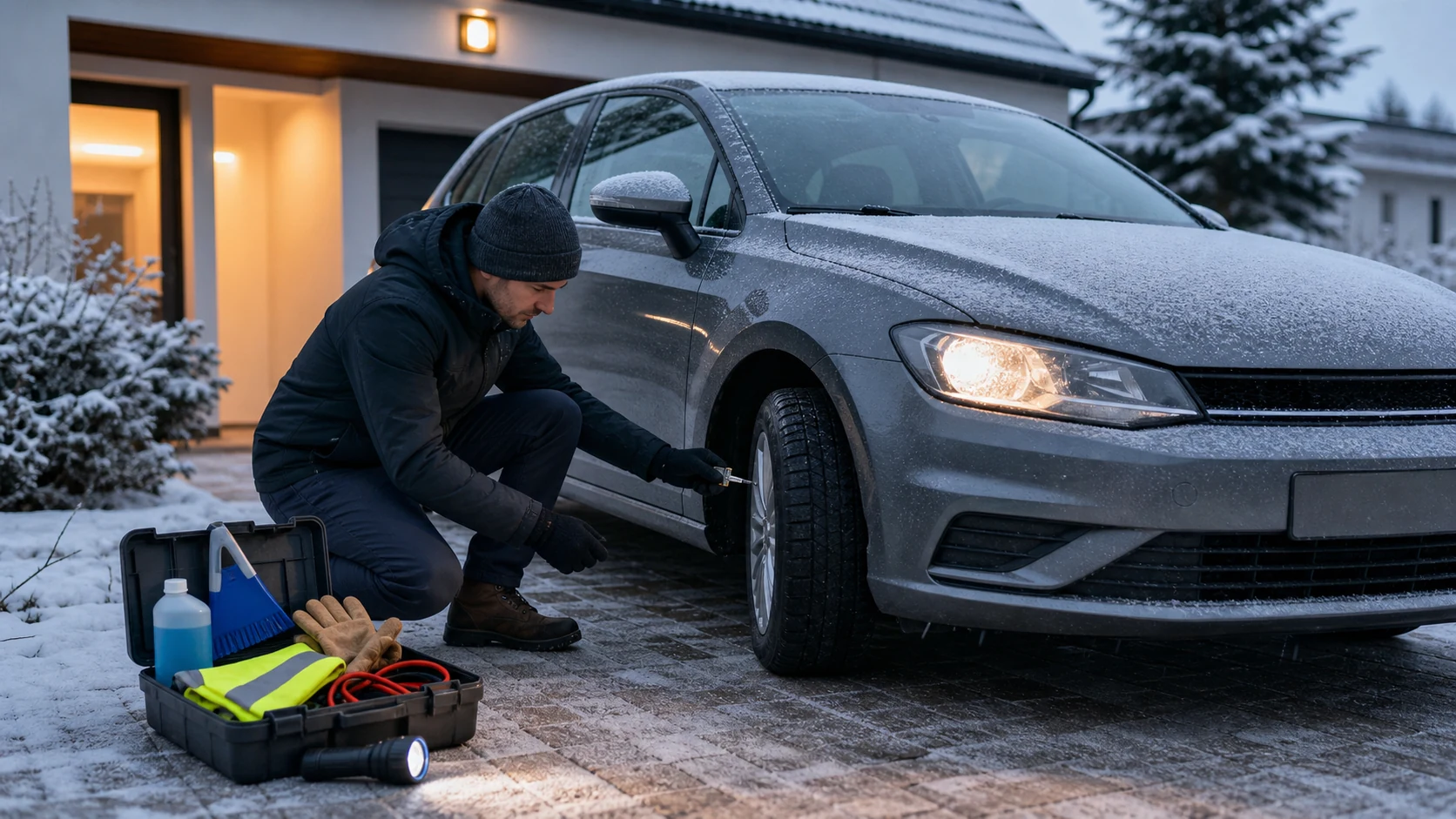
A practical winter kit may also include:
Store equipment so it cannot become a projectile. Snow chains are route- and tyre-specific equipment, not a universal substitute for suitable tyres. Practise fitting them safely before travel and obey local signs and manufacturer restrictions.
13. Remove snow and ice before moving
Clear the windscreen, side and rear windows required for visibility, mirrors, roof, bonnet, lights, cameras, sensors and number plates. A small viewing hole is not adequate. Snow or ice leaving the roof can endanger people behind, and obscured lamps or sensors impair safety systems.
Do not run the engine unnecessarily while scraping. Start only when you are ready to follow the vehicle's operating instructions and drive with full visibility. Driver-assistance systems remain aids; if sensors are blocked or conditions exceed their limits, the driver remains responsible for control.
14. Prepare electric and hybrid vehicles
Cold weather can increase energy use through cabin heating, battery conditioning and denser air, while charging and regenerative braking behaviour may change. Use scheduled preconditioning while connected when the vehicle supports it, but base journey planning on the car's displayed range and recent winter consumption rather than a fixed percentage loss.
Confirm the charging cable, connector, flap and seals are clean and undamaged. Never use damaged charging equipment or improvised extensions. Keep the 12-volt system in the checklist, follow high-voltage warnings and leave orange cables and battery cooling circuits to trained personnel.
15. Record the work and next action
Record date, mileage, tyre position or change, pressure setting, battery-test result, fluid specification, defects and completed repairs. A note such as “battery checked” is less useful than the test date, result and provider. Store invoices and inspection reports with the vehicle record.
Use reminders for the next seasonal inspection, tyre change, service or unresolved defect. The guide How to Track Fuel, Maintenance, and Repair Costs explains how to keep the underlying evidence without turning the winter checklist into advertising.
What can you check at home, and what needs a workshop?
| Item | Reasonable visual check | Workshop or assistance |
|---|---|---|
| Tyres | Symbol, pressure, tread and visible damage | Bulge, exposed structure, rapid loss or unusual wear |
| 12-volt battery | Starting behaviour and visible warning messages | Condition test, charging fault or replacement on modern vehicles |
| Lights | Function and clean lenses | Repeated failure, damaged housing or electrical fault |
| Washer system | Level, spray pattern and suitable product | Leak, failed pump or frozen/damaged line |
| Coolant | Cold level check according to handbook | Incorrect protection, leak, overheating or repeated loss |
| Brakes | Observe warnings and changed behaviour | Any safety-relevant symptom or red warning |
| Heating/demisting | Airflow and clearing function | Persistent dampness, leak signs or failed blower |
Seasonal schedule
Before the first likely frost
Complete all 15 checks, obtain tyre and battery assessment where needed, replace unsuitable fluids and repair known defects. Do not wait for the first icy commute to discover that the washer system or rear demister does not work.
Every month during winter
Review tyre pressure and damage, lights, washer level, wipers, emergency equipment and new warning messages. Adjust the interval for mileage, storage and severe conditions.
Before a long journey
Check the weather and route, charging or fuel plan, tyre pressure for load, washer fluid, visibility and emergency kit. Tell someone about unusually remote travel and allow time for conditions rather than relying on an arrival schedule that encourages risk.
Conclusion
A useful winter checklist is specific, repeatable and honest about its limits. Tyre suitability depends on actual road conditions and the Alpine symbol, battery replacement depends on condition, and fluid or brake faults need correct diagnosis rather than guesswork.
Prepare before frost, repeat the quick checks through the season and record what you find. If a safety-critical warning or defect appears, stop and seek qualified help. The goal is not to promise a breakdown-free winter; it is to reduce preventable surprises and begin every journey with a roadworthy, visible and properly equipped vehicle.
Frequently asked questions
When are winter tyres legally required in Germany?+
Germany uses a situational rule. Suitable tyres are required when roads have black ice, packed snow, slush, ice or frost. There is no fixed legal October-to-Easter season and no legal 7°C trigger. Tyres used in those conditions must carry the Alpine symbol.
Is 4 mm the legal minimum tread depth for winter tyres?+
No. The statutory minimum main-tread depth for passenger-car tyres is 1.6 mm. A greater winter depth is a safety recommendation, not the legal minimum. Replace or assess tyres earlier when condition, damage or performance requires it.
Should a car battery automatically be replaced after five years?+
No. Age should prompt a condition test rather than automatic replacement. Usage, charging, storage and electrical faults affect battery life. Have the battery tested when starting becomes slow, warnings appear or winter reliability is uncertain.
Can I check engine coolant while the engine is hot?+
No. Never open a hot pressurised cooling system. Follow the vehicle handbook and check the level only under the specified safe conditions. Falling level, leakage, steam or an overheating warning requires professional diagnosis.
What must be carried in a car in Germany for emergencies?+
German equipment rules cover items including a warning triangle, high-visibility vest and first-aid material. Keep them accessible and serviceable. A winter kit can additionally include an ice scraper, snow brush, gloves, blanket, flashlight and charging cable.
What additional winter checks apply to an electric car?+
Check the 12-volt system, charging cable and connector, use preconditioning when supported, and plan around the vehicle's recent winter consumption. Do not work on high-voltage components or use damaged or improvised charging equipment.
Fahrnex note
The calmest maintenance decisions usually come from keeping dates, receipts, and service history connected instead of scattered.
About this article
Fahrnex evidence check
Fact-check and sources
The guide separates German legal requirements from seasonal rules of thumb, treats battery age as a reason to test rather than an automatic replacement interval, and uses condition-based stop-driving guidance.
| Claim checked | Evidence base | Editorial outcome |
|---|---|---|
| Situational winter-tyre duty | German StVO section 2(3a) | No fixed legal season or 7°C threshold is claimed. |
| Tyre marking and tread | German StVZO section 36 and ADAC tyre guidance | Alpine symbol required; 1.6 mm legal minimum separated from safety recommendations. |
| 12-volt battery | ADAC battery-testing guidance | Replacement is based on condition and diagnosis, not age alone. |
| Emergency equipment | German StVZO section 53a | Warning triangle, high-visibility vest and first-aid material are included. |
| Technical checks | Vehicle-specific handbook principle | No universal coolant, pressure, charging or service specification is invented. |
Editorial checks completed
- Legal rules separated from rules of thumb
- Alpine-symbol transition reflected
- Battery age not used as automatic replacement instruction
- Hot-coolant and brake warnings included
- Home checks separated from workshop diagnosis
- Electric and hybrid vehicles covered
- Dedicated tyre article linked without duplicating its full scope
Editorially reviewed on 18 August 2026. Sources:
The editorial team checked official sources against the Fahrnex product methodology. This article is not a substitute for case-specific technical, legal or tax advice.